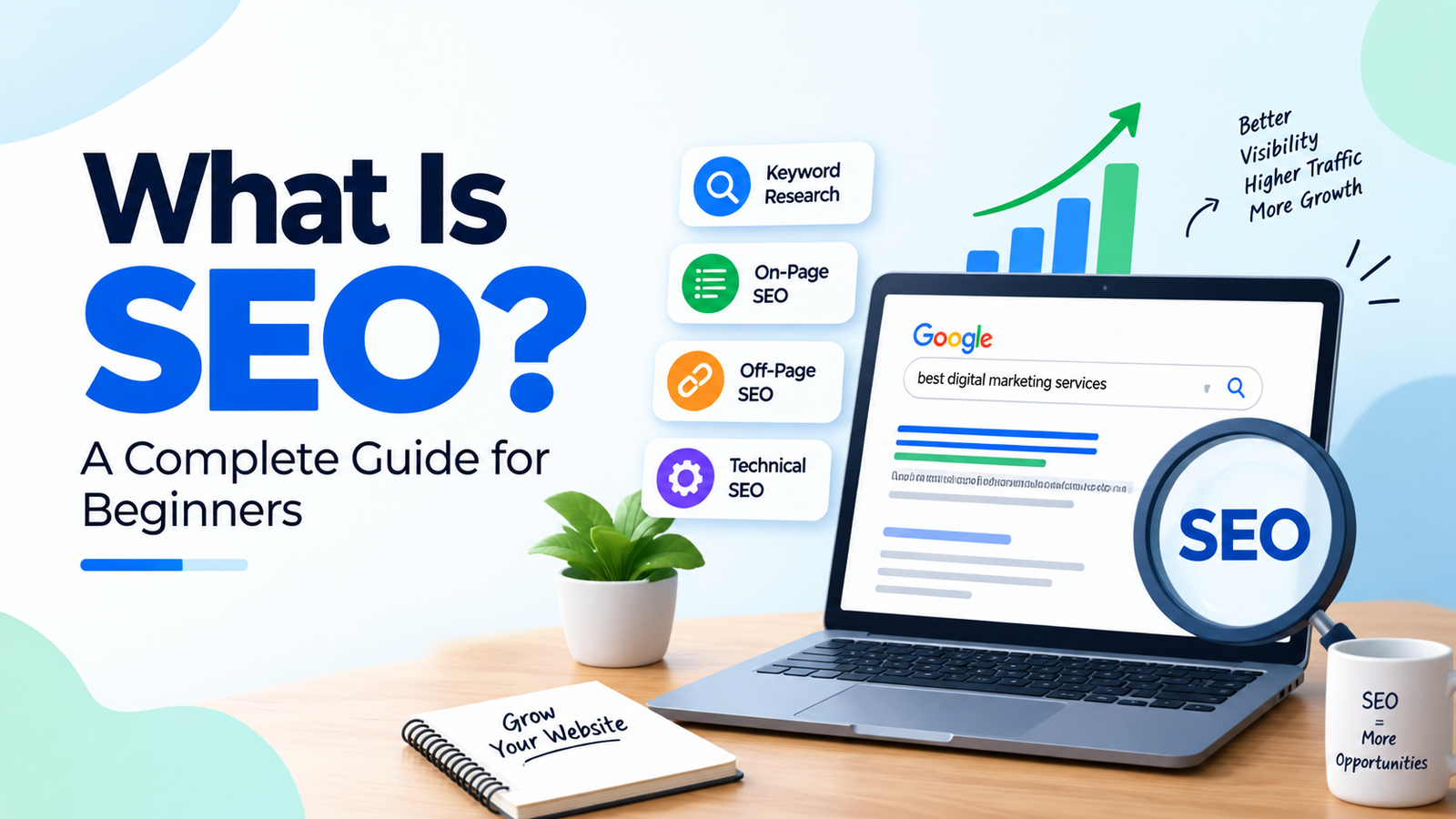
What Is SEO? Complete Guide for Beginners
- By Admin
- |
- 0 Comments
 SEO Basics: Everything Beginners Need to Know
Have you ever searched for something on Google and wondered why some websites appear on the first page while others are nowhere to be found? That is where SEO comes into the picture.
SEO, or Search Engine Optimization, is one of the most important parts of building an online presence today. Whether you run a small business, an e-commerce store, a personal blog, or a large company website, SEO can help people find you when they search for products, services, or information related to your business.
In simple terms, SEO is about making your website easier for search engines to understand and more useful for the people visiting it.
What Is SEO?
SEO stands for Search Engine Optimization. It is the process of improving a website and its content so that it has a better chance of appearing in relevant organic search results.
For example, imagine you own a web development company in India. A potential customer searches for “web development company in India.” If your website is properly optimized for this search and provides genuinely useful information, Google may consider your page relevant enough to show it in the search results.
The goal isn't simply to get more visitors. Good SEO focuses on attracting the right visitors—people who are actually interested in what your business offers.
 How Does SEO Work?
Search engines such as Google use automated programs called crawlers to discover and understand webpages. They look at things such as the content on a page, links, website structure, and many other signals.
The process can be broadly divided into three steps.
Crawling: Search engines discover webpages by following links and visiting websites.
Indexing: The information found on a webpage is analyzed and stored in the search engine's index.
Ranking: When someone searches for something, the search engine decides which indexed pages are the most relevant and useful for that particular query.
SEO helps your website communicate more clearly with search engines while also improving the experience for your visitors.
Why Is SEO Important for a Business?
Think about how you usually find a new restaurant, software, product, or service. Chances are, you search for it online.
A strong SEO strategy can help your business appear when potential customers are already looking for something you provide. This can lead to more organic traffic, enquiries, sales, and brand visibility.
Another major advantage is that SEO can provide long-term value. Unlike paid advertising, where traffic generally stops when you stop spending, a well-optimized page can continue attracting organic visitors over time.
Of course, SEO isn't a shortcut to instant results. It requires patience, testing, and regular improvement.
What Are the Main Types of SEO?
SEO covers several different areas, but three are particularly important.
1. On-Page SEO
On-page SEO involves optimizing elements on your website. This includes page titles, headings, content, keywords, images, URLs, and internal links.
The focus should be on creating pages that clearly answer what the user is searching for—not simply adding keywords repeatedly.
2. Off-Page SEO
Off-page SEO focuses on activities outside your website. One of the best-known examples is link building, where other relevant and trustworthy websites link to your content.
Brand mentions, digital PR, and building relationships within your industry can also support your website's authority.
3. Technical SEO
Technical SEO deals with the behind-the-scenes aspects of your website. Website speed, mobile usability, HTTPS, XML sitemaps, crawlability, website structure, and Core Web Vitals are some common areas.
Even excellent content can struggle if search engines have difficulty accessing or understanding your website.
What Is Keyword Research?
Before creating SEO content, you need to understand what your audience is actually searching for. That's the purpose of keyword research.
Suppose you provide SEO services. Instead of targeting only a broad term like “SEO,” you might discover more specific searches such as “SEO services for small businesses” or “SEO company in India.”
Keyword research helps you understand search demand, competition, and—most importantly—the intent behind a search.
The best keyword isn't always the one with the highest search volume. A more specific keyword can sometimes bring visitors who are much closer to becoming customers.
How Can You Start SEO?
If you're just getting started, don't try to optimize everything at once. Begin with the basics.
Research keywords that are relevant to your business, create genuinely useful content around them, optimize your titles and headings, improve your website's speed and mobile experience, and build a logical internal linking structure.
You should also regularly check your website's performance and look for pages that can be improved.
Most importantly, avoid thinking of SEO as a one-time project. Search trends change, competitors publish new content, and search engines continuously improve their systems. SEO works best when you keep learning, testing, and improving.
Final Thoughts
SEO is ultimately about one simple idea: helping the right people discover your website at the right time.
There are technical elements to learn, but you don't need to be an SEO expert to understand the fundamentals. Start by understanding your audience, create content that genuinely helps them, and make your website easy for both visitors and search engines to navigate.
With consistent effort, SEO can become a reliable source of organic traffic and help your business build a stronger presence online.
Common SEO Mistakes Beginners Should Avoid
When people first start learning SEO, it's easy to focus too much on rankings and forget about the actual people visiting their website. Here are a few mistakes worth avoiding.
Keyword Stuffing
Using your target keyword repeatedly doesn't automatically improve rankings. In fact, excessive keyword usage can make your content difficult to read. Use keywords naturally and focus on answering the reader's question.
Publishing Content Without Understanding Search Intent
Before writing an article, understand what someone actually wants when they search for your target keyword. If users are looking for a beginner's guide, giving them a sales-heavy page probably won't satisfy their needs.
Ignoring Technical SEO
Good content alone isn't enough. If your website is slow, difficult to navigate, or has technical problems that prevent search engines from accessing your pages, your SEO performance can suffer.
Expecting Immediate Results
SEO takes time. A new website usually won't reach the top of Google overnight. Instead of constantly changing your strategy, focus on creating useful content, improving your website, and tracking your progress consistently.
Copying Content From Other Websites
Simply rewriting what competitors have already published doesn't give readers much new value. Try to bring your own experience, examples, research, or perspective to every article you publish.
The best SEO strategy is not about trying to trick search engines. It's about creating a website that people find useful and search engines can understand.
- SEO and Content Marketing
- SEO Search Engine Optimization SEO for Beginners SEO Guide Digital Marketing On-Page SEO Off-Page SEO Technical SEO Keyword Research Organic Traffic