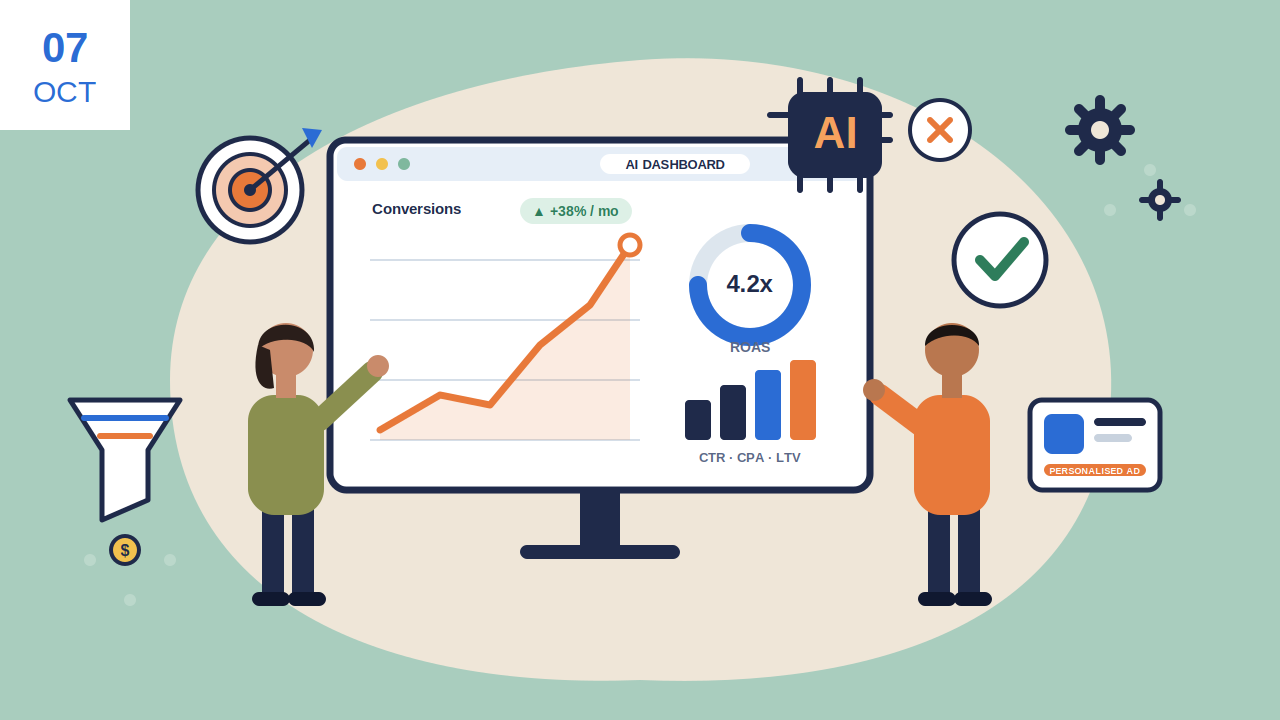
How AI Is Changing Performance Marketing: The Future of Data-Driven Advertising
- By Admin
- |
- 0 Comments
Performance Marketing in the AI Era: What Every Marketer Should Know
AI is changing performance marketing faster than most of us expected, and it's shaping the future of data-driven advertising. Not long ago, running ads meant late nights with spreadsheets and plenty of guesswork. Performance marketing has always been about measurable results like clicks, leads, sales, and ROAS, but getting those results took hours of manual checking. Now AI marketing tools handle the repetitive work, so marketers can spend their time on strategy, creativity, and understanding customers.
Smarter Audience Targeting
Instead of targeting "people aged 20-35 who like shoes," AI looks at behaviour: what people click, browse, and buy. Picture an online sneaker brand. Rather than guessing at groups like "fashion lovers" or "college students," the platform learns from real conversion data and finds people who are genuinely likely to buy. The question shifts from "Who should we target?" to "Who is most likely to act?" Good tracking still matters, because bad data means bad targeting.
Faster Campaign Optimisation
A human checks campaigns once or twice a day, while AI checks continuously. Say one ad gets lots of clicks but almost no sales, while another gets fewer clicks and far more purchases. AI spots this quickly and shifts delivery to the one that converts. Just remember it optimises for the goal you set, so choose profitable customers over cheap clicks.
Creative at Scale
AI can draft headlines, scripts, and ad variations in minutes, which makes testing much easier. A sneaker brand could try versions focused on comfort, style, or price, then let the data show which one wins. Unedited AI content can sound generic, so the best results come when AI offers options and a human with real brand sense polishes them.
Personalisation Without the Creepiness
A first-time visitor, someone who abandoned their cart, and a loyal customer shouldn't see the same ad. AI matches the message to each person's stage in the journey. Aim for relevance, not the feeling of being watched. Privacy and consent matter just as much as clever targeting.
Predictive Analytics and Budgeting
AI doesn't just report yesterday's results. It estimates what's likely next, like which customers will be most valuable and where your daily ad budget will work hardest. Treat predictions as guidance, and always check that more conversions actually mean more profit. For example, 100 leads at ₹100 each may look better than 50 leads at ₹150, but if the second group buys more, it's the smarter spend.
Customer Journey and Reporting
Performance doesn't end at the click. AI shows where shoppers drop off, scores leads so sales teams call the hottest ones first, and turns messy reports into plain-language insights. You can even ask, "Why did our cost per lead go up?" and get a useful starting point. That means less time formatting numbers and more time acting on them.
Marketing Automation
Reports, first-draft copy, and lead sorting can all be automated, letting small teams do work that once needed a bigger department. Chatbots can even answer simple questions at midnight. Keep a human approval step for anything that affects your brand's reputation.
The Future Is Human + AI
AI is brilliant with data and speed, but it doesn't understand your brand's personality, culture, or ethics, and it can't fix a weak product. Humans bring strategy, creativity, and judgment. The strongest campaigns use both.

Final Thoughts
AI isn't replacing marketers. It's changing the job. Those who learn to work with AI, pairing smart tools with real customer understanding, will lead the next era of performance marketing.
- Digital marketing
- AI,performance marketing,digital marketing,ROAS,